


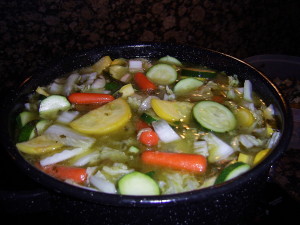
 This recipe can be made with almost any ingredients you enjoy eating, but I recommend sticking with a healthy version with lots of vegetables. Use a large pot and freeze portions for later use.
1 Whole Organic Chicken
3 Organic Zucchini Squash
3 Organic Yellow Crook Neck Squash
2 Cups of Organic Baby Carrots
1 Head of Organic Napa Cabbage
1 Can of White Beans
1 Can of Garbanzo Beans
1 Can of Butter Beans
1 Can of Diced Green Chilies
1 Bunch of Organic Cilantro
1 Diced Organic Onion
Begin by roasting the chicken in the oven for one hour at 425 degrees. Use a chicken stand that allows most of the fat dripping from the skin to drain into the bottom. Discard these drippings to reduce the fat in the soup. After roasting the chicken, place it in a soup pot and cover it with water. Add diced onion, cilantro, diced green chilies and season with salt, pepper and garlic to taste.
Cook the chicken until the meat falls off the bones. Remove chicken from water, discard the bones and skin, chop the meat and return it to the broth in the soup pot. Drain the beans and add them to the pot. Chop and add the vegetables. Simmer for about one hour. Enjoy!
As an option, brown rice is a nice alternative for the beans.
 Blowing raspberries is very different than blowing bubbles while scuba diving but can still be a lot of fun. Most of us probably don’t remember the first time we blew a raspberry as part of discovering our mouth at the age of just four to five months old. We most often blow raspberries to make others laugh because of the sound and the tickling sensation. It is usually an intimate gesture as it involves using the lips and tongue on another person’s belly to make a “pbbbt” sound. Although it originated in cockney slang, blowing a raspberry is widely and cross-culturally understood and practiced.
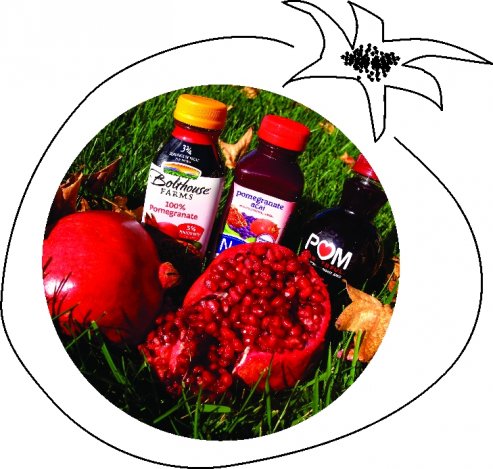 Last week a friend of mine who is recovering from a heart valve repair received a bottle of pomegranate juice as a get well gift. The pomegranate gift was perfect. Pomegranates contain polyphenols with powerful antioxidant properties. The touted health benefits of pomegranate juice are sometimes loosely and broadly stated, so I wanted to bring sound information and studies that are particularly interesting for divers.
 My friend’s surgery was two-weeks ago and he is already walking three miles a day and has returned to half days at work. The surgery was performed by