
Aerobic Exercise Improves Mental Performance for Divers

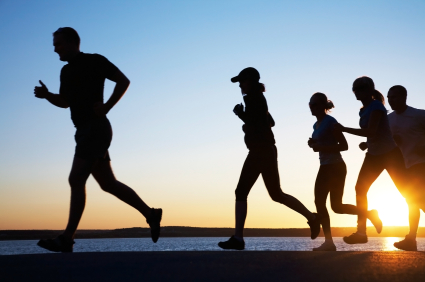
Aerobic Exercise Improves Mental Performance for DiversThe “runner’s high,” a “feel better” sensation often experienced by long-distance runners, is generally attributed to high levels of endorphins in the the brain. Researchers have known for some time that exercise increases endorphin production. In addition to improving the efficiency of the heart, lungs and vascular system, aerobic training can actually produce an anti-depressant type of effect including improvements in emotional and intellectual health.

Aerobic exercise improves mood stability often allowing those under a doctor’s care to reduce anti-depressant and anxiety medications. Improvements in self-esteem, increased confidence, and a more positive outlook for the future are also benefits of the effects of physical activity on brain chemistry.

Studies indicate that aerobic exercise improves mental acuity resulting in better concentration, enhanced ability to direct thoughts, and improved memory, all important mental performance activities for divers. Further neurophysicological advantages include a reduction in the symptoms of diseases such as Parkinson’s, improved sleep patterns, and diminishing the craving responses during smoking cessation.

Cardiorespiratory fitness is essential for scuba diving. Incorporating aerobic exercise in the diver’s daily routine is definitely not a “no-brainer” but it isn’t difficult to achieve. The results of the above-mentioned studies were accomplished in only five weeks with 30 to 60 minutes of exercise three times a week.

Examples of aerobic exercise are walking, jogging, running, swimming, rowing, cycling, jumping rope, aerobics classes, and dancing. Fitness centers and home gyms provide equipment such as treadmills, stairclimbers, ellipiticals and exercise bikes. Aerobic exercise may also be performed outdoors almost anywhere and can be a family activity, social time for moms while children are at school, or tranquil time alone.
Being Coachable

Whether learning to scuba dive or accomplishing goals for scuba fitness; Being Coachable is a mature attitude of learning and collaboration essential to being a healthy and competent diver.

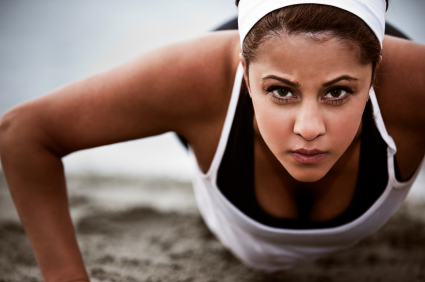
Sporty womanRecently I won a gift certificate for a month of fitness classes. As a fitness professional in high demand my schedule is usually booked. As a necessity my own workouts are typically self-trained sessions at unusually early and late hours. However, this time I had an opening in my schedule that matched an early morning fitness boot camp. It felt great to be coached through a workout for the first time in many years.

10 years ago while I was power lifting competitively I had the pleasure of training with both a coach and teammates. I later coached power lifting athletes more than twice my age. At the same time I owned a private fitness facility and mentored a team of eight personal trainers. Together we conducted 150 private fitness appointments and classes each week.

At monthly team meetings, in addition to discussing necessary day-to-day business like many companies, each trainer shared a list of business and personal goals; what was added to the list or accomplished since our last meeting. A common goal and requirement for employment was maintaining current credentials with continuing education; in other words learning something new. Since my personal trainers were well educated I knew they had the knowledge to bring the best fitness coaching to their clients. Beyond that, sharing our goals with each other helped us to get to know each other better and encourage each other. We made direct positive impact on each other’s success; such as client referrals or team training clients during alternating vacation schedules.

One of my mentors said, “Everyone needs a coach.” I changed it to “Everyone needs a coach sometimes,” because I believe we can each be self-motivated enough to make some improvements on our own. However, there is definitely a place for seeking out a professional to move beyond our own resources and limitations, and learning something new is often a requirement to reach high levels of performance. It is important to choose coaches carefully. Both dive instructors and fitness professionals need to carry current and proper credentials. Divers will often find the most committed and successful instructors are those with regular and consistent continuing education. Good instructors and coaches will respect that an individual is reaching out to them for their expertise and inspiration, and be certain not to exploit or take negative advantage of their position in the relationship. Good students will bring their personal best all the time – physically, mentally and emotionally.

In the book “Awakening the Olympian Within” compiled by Jim Naber, Olympic Gold Medalist Nancy Hogshead, the most decorated swimmer in the 1984 Olympics in Los Angeles, wrote, “Success is a Learned Skill.” About Being Coachable, she said:

“Everyone talks about finding a mentor or mentoring others, but few talk about the skills needed to be mentorable, to be coachable. I define being coachable as giving another person permission to demand the very best of you. I don’t mean following someone blindly, ignoring your ideas or principles. I’m talking about having a goal big enough that you’re willing to step outside your comfort zone – in your relationships with others – and to allow someone else to contribute.”

Fitness boot camp was a lot of fun and I am going again tomorrow…and I did learn something new.

Pros Team Up to Bring Fitness to Divers

PADI approves brand new ScubaFit® Diver Distinctive Specialty Course

Dive and fitness instructors alike can now become certified to teach fitness to divers.  The Padi ScubaFit® course was developed by Gretchen M. Ashton, a certified fitness trainer and Stephen Mendel, a multi agency scuba instructor.

The PADI ScubaFit® Diver Distinctive Specialty Course offers new opportunities for instructors and dive shop owners to improve the health, performance and safety of their diving clients and increase diving participation.  Divers who are fit are much more likely to enjoy their diving experience and to dive more often. Classes are forming now.  For more information, interested instructors may contact: gretchen@scubafit.com or stephen_mendel@hotmail.com.

Ashton is a diver and the owner of ScubaFit®. She is an International Sports Sciences Association Personal Trainer and Fitness Therapist, National Board of Fitness Examiners Personal Trainer, World Champion Hall-of-Fame Athlete, and scuba fitness writer. Her training success, unique coaching style and innovative work establishing a health profile of the scuba diving community also resulted in the FitDiver® program.

Mendel, owner of Premier Scuba Diving, is a NAUI and Los Angeles County Instructor Trainer, PADI Master Scuba Diver Trainer, CMAS and Handicapped Scuba Association and a First Aid/CPR/AED instructor. He has extensive diving, teaching and leadership experience along with a longtime and ongoing participation and interest in fitness. He is also a voice over artist with many projects to his credit.

Ashton and Mendel acknowledge both the inspiration and practical importance of Dr. Glen Egstrom’s groundbreaking research and the meaningfulness it brought to this first of its kind course. Egstrom, Professor Emeritus of Kinesiology at UCLA, is renowned for his extensive contributions including the UCLA Diving Safety Research Project and over 100 publications on the topics of dive training and safety.

“We believe that our collaboration provides the best knowledge, resources and experience to bridge the worlds of diving and fitness. We encourage dive instructors and fitness professionals who select this specialty course to enhance the teaching and learning experience by working together whenever possible, for the common good of all divers.”

The purpose of the PADI ScubaFit® Diver Distinctive Specialty Course is to teach divers who are new to fitness an effective approach toward the establishment of a foundation of general fitness and fitness specific to diving, as well as an understanding of the physical demands of diving.

The course serves as a safe and supervised fitness program for diving. This specialty familiarizes divers with the skills, knowledge, planning, organization, procedures, techniques, problems, hazards and enjoyment of being physically fit for diving.  Divers will learn how fitness greatly improves diving performance and reduces the risk of injury and illness.

For those divers with experience and knowledge of general fitness, in addition to the above mentioned topics, they will learn activity specific exercises and training concepts that will enhance all their diving activities. All divers will also be given an introduction to the basics of nutrition and the necessity of maintaining hydration during diving.